Adapting to Tariff Challenges with AI-Powered Solutions
As tariffs disrupt global markets, AI-driven tools and unified data can help navigate challenges, mitigate risks, and enhance your business’s resilience.
Adapting to Tariff Challenges with AI-Powered Solutions
As tariffs disrupt global markets, AI-driven tools and unified data can help navigate challenges, mitigate risks, and enhance your business’s resilience.



In an increasingly fragmented global landscape, tariffs have become powerful instruments of policy—reshaping trade relationships, disrupting supply chains, and introducing new risk variables for both enterprises and financial institutions. As governments respond to the resulting geopolitical shifts and economic tensions, organizations must keep pace with significant volatility and fast-moving changes that can upend operations overnight.
For organizations in manufacturing, technology, agriculture, and beyond, the consequences are significant: sudden cost spikes, disrupted sourcing strategies, and constrained access to key markets. Meanwhile, financial institutions must continually reevaluate exposure across their portfolios, as clients with tariff-sensitive supply chains face growing financial strain.
To navigate this volatility, you need more than visibility—you need context. That’s where AI, contextual data, and advanced decision intelligence come into play. And, at the forefront of these innovations are Simulation Labs developed by Q Labs, which enable organizations to anticipate threats, simulate impacts, and develop proactive strategies.
From disruption to resilience: unified data matters
Managing tariff-related disruption requires and end-to-end understanding of your customers’ supply chains, from raw material sourcing through to delivery. But that understanding is only useful when it’s contextualized—connected to external factors such as policy changes, trade relationships, and geopolitical events. Without a unified view of these factors, organizations are relegated to reacting to problems rather than anticipating and preventing them.
That’s why decision-makers increasingly are turning to advanced technologies like knowledge graphs, discriminative AI/ML (e.g., neural networks), knowledge graphs, and generative AI (e.g., large language models (LLMs)). When combined effectively, these tools transform fragmented datasets into a connected whole providing new insights—helping businesses understand not just where disruptions might occur, but why, and what action to take next.
By linking internal operational data with external signals—such as emerging tariffs, regulatory shifts, and market responses—organizations can anticipate threats, simulate impacts, and develop proactive strategies that protect both revenue and reputation.
Transparency at scale, powered by AI
Tariff-driven complexity cannot be solved with siloed systems. It requires connected intelligence: an infrastructure that provides sufficient transparency across the entire value chain and the agility to act at the speed of events.
One of the key techniques in ensuring this is with entity resolution—the process of dynamically linking billions of records to create a single, trusted view of customers, suppliers, and counterparties. Enriching this unified view with contextual network analysis, reveals the relationships and dependencies that underpin your operations.
Once data is unified, advanced graph analytics can surface even deeper insights into the relationships, behaviors, and dependencies across the supply chain. This connected view helps reveal hidden risks that would otherwise remain buried in siloed data.
For example, a company might rely on a second-tier supplier in a country newly impacted by tariffs. Without entity resolution and relationship mapping, that dependency could go unnoticed until it's too late. With the right technology, that risk becomes visible, actionable, and manageable.
With this foundation, businesses can simulate disruptions and evaluate options before making high-impact decisions. They can also embed these insights into processes across the enterprise—from supply chain and procurement to risk and finance—ensuring that everyone operates from the same context-rich intelligence.
The banking perspective
Tariffs don’t just impact supply chains—they ripple through financial ecosystems. For banks, understanding how these dynamics affect clients’ risk profiles is more important than ever.
AI-driven tools can help banks connect the dots between supply chain exposure and creditworthiness. By analyzing trade flows, sourcing patterns, and geopolitical dependencies, financial institutions can identify which clients are vulnerable to tariff changes—and by how much.
Knowledge graphs and LLMs enable banks to ingest unstructured data such as regulatory updates or regional developments, transforming them into actionable insights. With these capabilities, institutions can simulate stress scenarios, anticipate default risks, and provide more tailored advisory services to clients navigating uncertainty.
For instance, if a bank has exposure to a client in Singapore that relies heavily on a supplier in a newly sanctioned region, Quantexa’s platform can identify that dependency long before it leads to financial distress. By surfacing these implicit exposure, banks can better manage risk and support clients with data-driven strategies.
The future of supply chain tech: Simulation Labs from Q Labs
Tariffs rarely arrive in isolation—they’re often part of broader geopolitical movements that introduce second- and third-order effects. Understanding these cascading risks is critical for building resilience.
Thats why Q Labs, Quantexa’s innovation hub, has developed Simulation Lab which offers a secure environment to explore these complexities. Once ready, organizations will be able to model “what-if” scenarios to test how tariff changes might affect supply chains, credit exposures, or operational performance. Whether you’re a manufacturer planning sourcing strategies or a bank managing portfolio risk, the ability to explore downstream impacts before they happen gives you a decisive advantage.
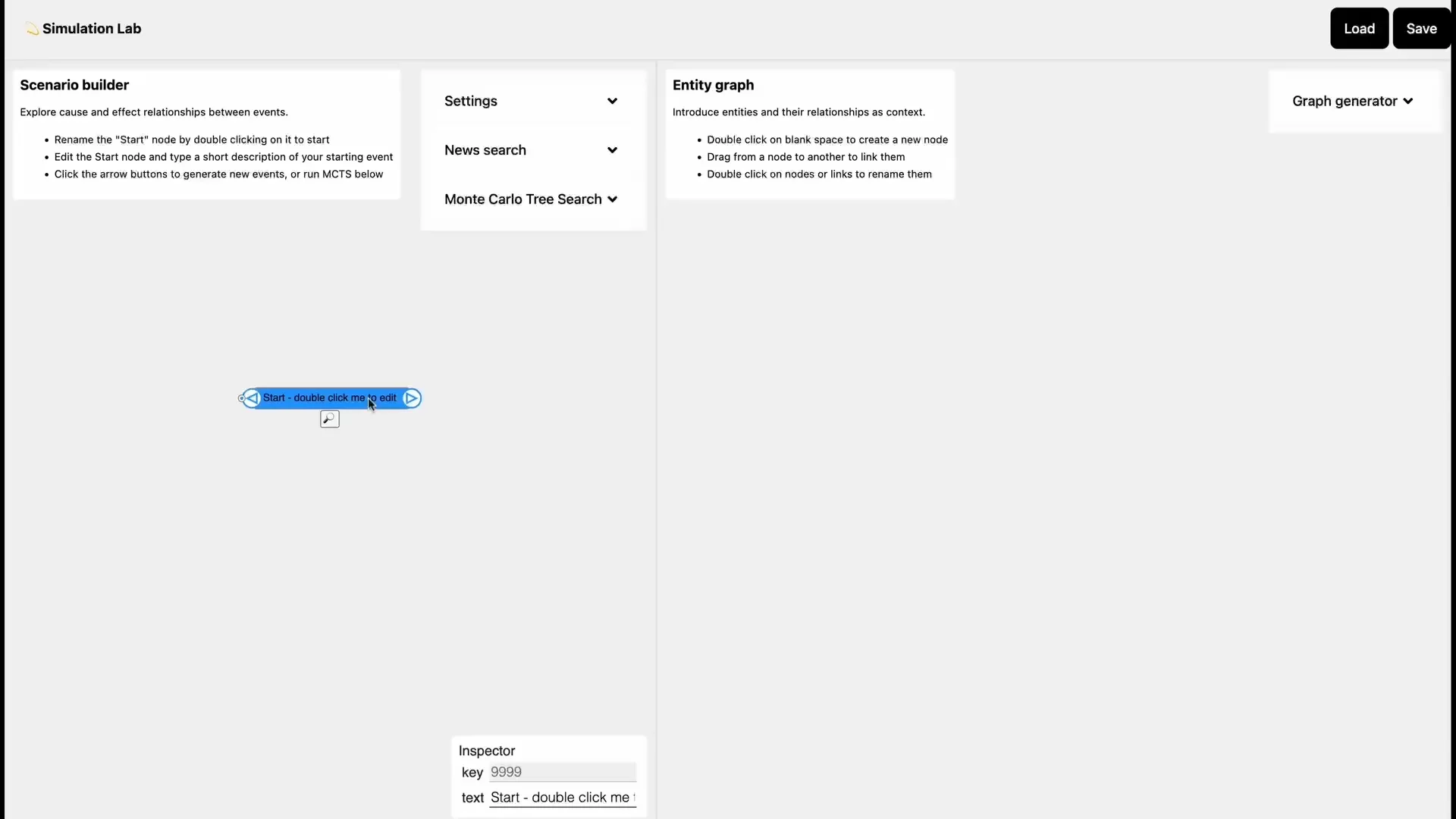
Simulation Lab is a next-generation prototype that brings together the generative capabilities of large language models with deep domain expertise to drive smarter, context-rich decisions when applied across trusted, unified data. By turning raw data into dynamic, forward-looking scenarios, it enables organizations to anticipate risk, explore opportunities, and make more informed strategic choices with a real-world view of the entire supply chain. As we continue to evolve this prototype within Q Labs, we’re actively collaborating with partners and clients to shape its development and unlock new value across planning, resilience, and risk management.
Staying ahead in a changing world
Global trade is entering a new era. Alliances are shifting, markets are fragmenting, and the pace of regulatory change is accelerating. As tariffs become both more frequent and more targeted, organizations need more than information—they need intelligence.
Quantexa empowers businesses and financial institutions to see the full picture. By unifying data, uncovering relationships, and embedding context into every decision, we help our customers navigate complexity with clarity and confidence.
Whether you’re managing supply chain risk, optimizing procurement, or safeguarding financial portfolios, Quantexa’s Decision Intelligence Platform offers the foundation you need to adapt and thrive.
Ready to build resilience into your supply chain or portfolio? Get in touch to learn how Quantexa can help you stay one step ahead in a world defined by disruption.